

Loading: the flyer does the work
1
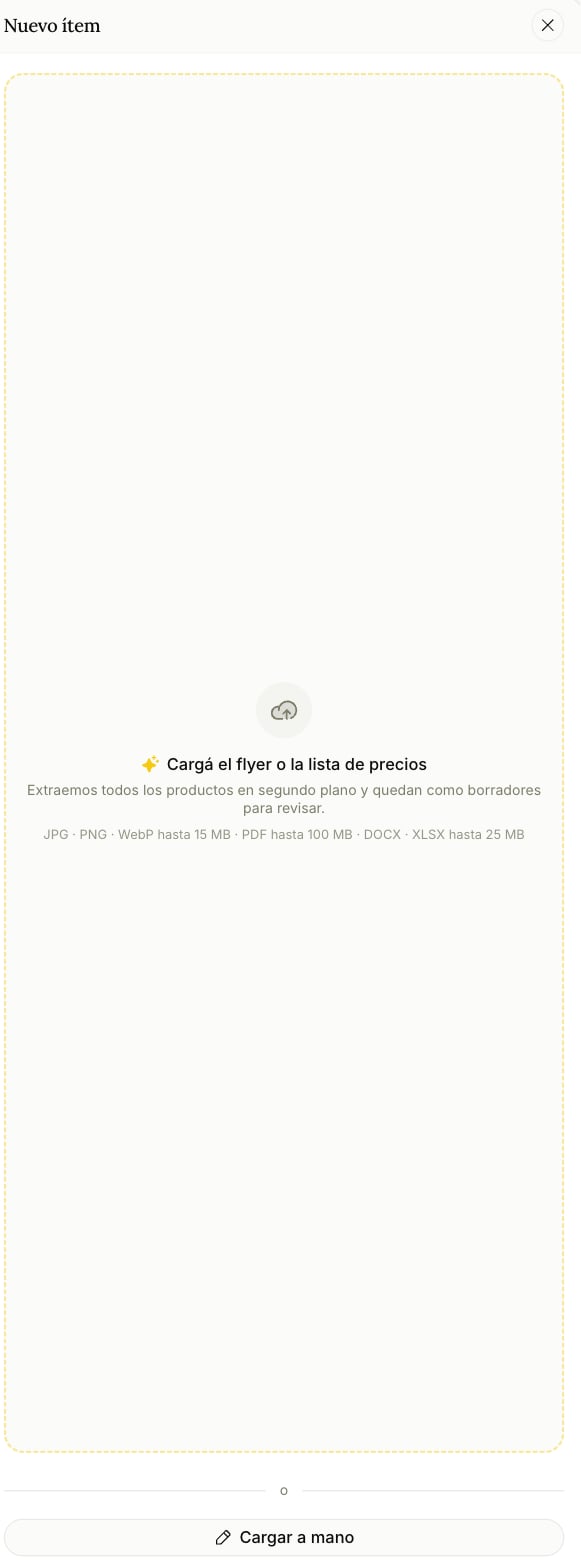
Drop the file
A flyer, a price list, an operator’s sheet. JPG, PNG or WebP up to 15 MB · PDF up to 100 MB · DOCX or XLSX up to 25 MB. Files only — there’s no pasting a link or a block of text.
2
It extracts everything, in the background
Not a summary: if the flyer has twenty options, you get twenty products. You can keep working while it runs. You’ll get a notification when they’re ready, and if you close the tab and come back it’s still going.
3
They land as drafts
This is the part worth internalizing: an extracted product is invisible to the agent until a person publishes it. The AI never puts words in your agent’s mouth on its own.
4
You review and publish
The draft opens in the same editor as any other item. Fix what came out wrong, complete what’s missing, publish. From that moment the agent can offer it.
One flyer, two travel dates and the same hotel is one product with variants, not two products. A different destination or a different kind of trip is a new product. The extraction already works that way — worth knowing so you don’t “fix” something that isn’t broken.
What each field changes
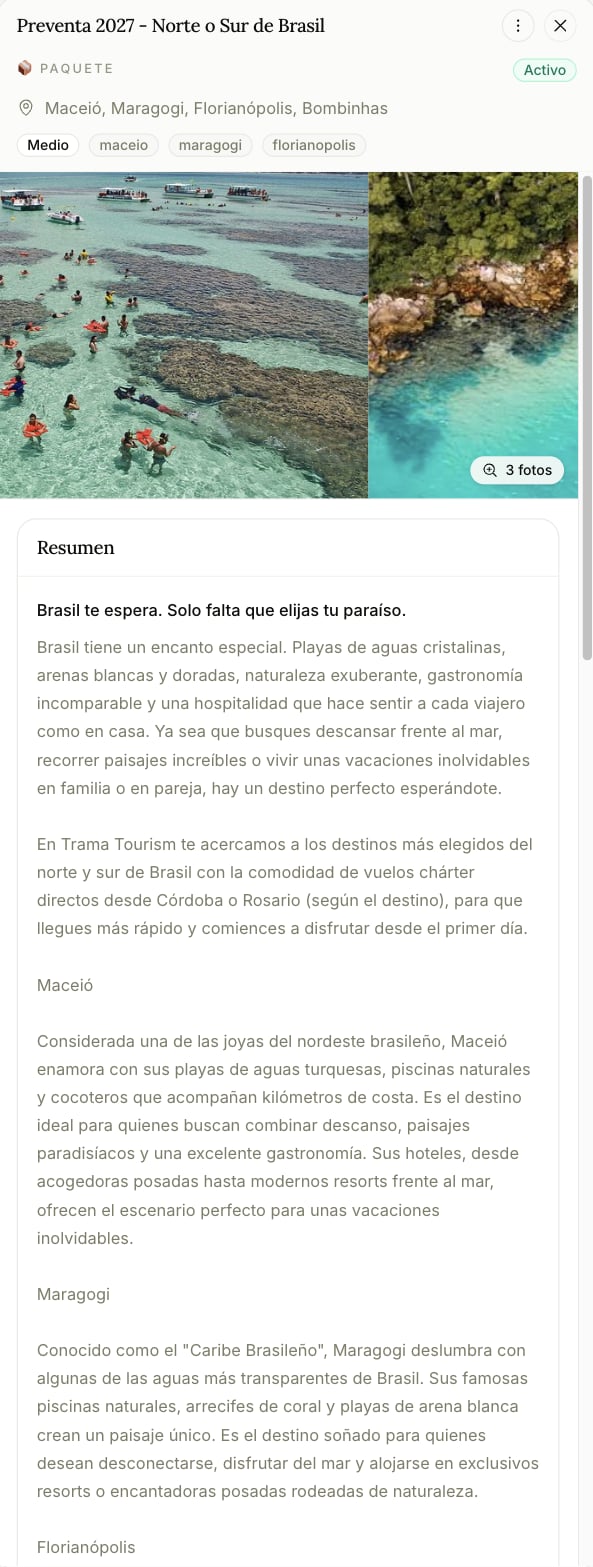
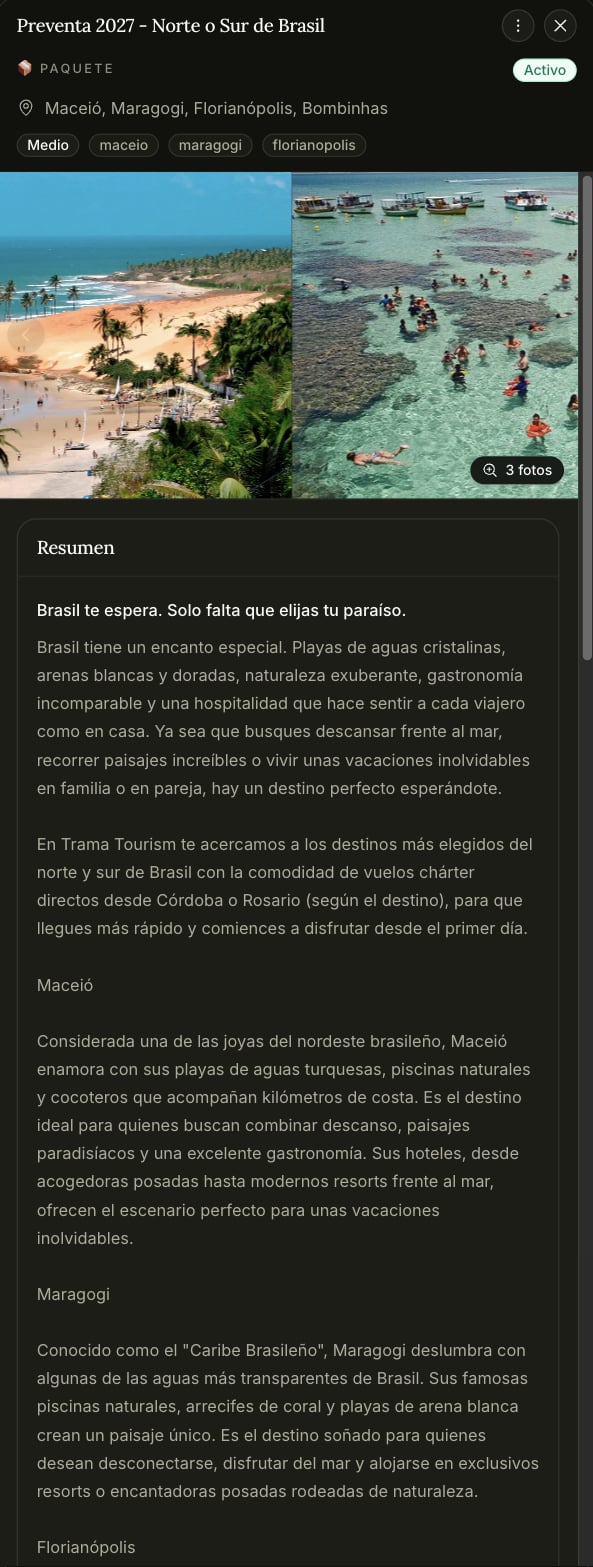
These do not affect the agent: the cover photo, the gallery and whether it shows on your Offer Link — that’s the public micro-site only. And internal notes and the operator never reach the agent, which is exactly why they’re the right place for what you don’t want repeated to a customer.
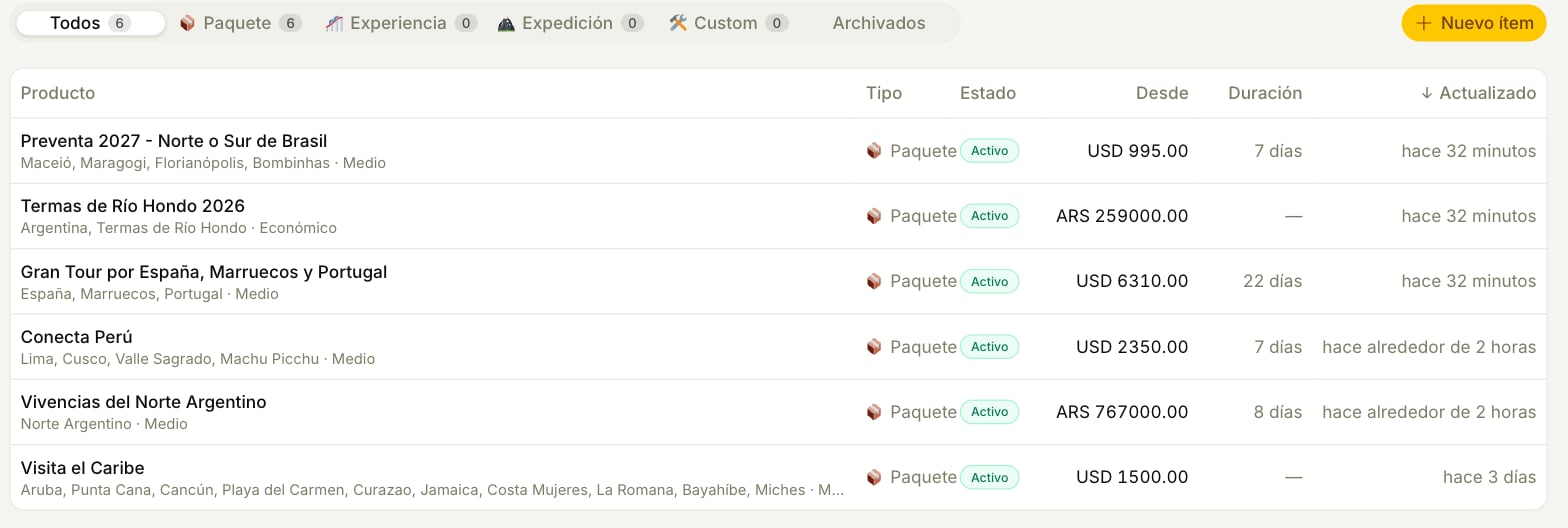
And one that’s a surprise: the type (package, experience, expedition, custom) is a label for you. The agent deliberately doesn’t filter by it — filtering by type was hiding a quarter of the catalogue from perfectly good answers.
How the agent actually uses it
Three layers, and knowing them explains behavior that otherwise looks random:- An index it always carries — titles, destinations, duration and season for up to a hundred products. No prices. It’s how the agent knows something exists; it isn’t allowed to quote from it.
- A search, when it needs specifics — filtered by destination, theme, budget, capacity or nights. If nothing comes back it automatically widens the search rather than saying “we don’t have that”, and then it has to verify before offering.
- A fresh read of the product being discussed, every turn. That’s why a price change takes effect mid-conversation instead of the agent repeating a stale figure.
Status
Pausing is for something you still sell but not right now.